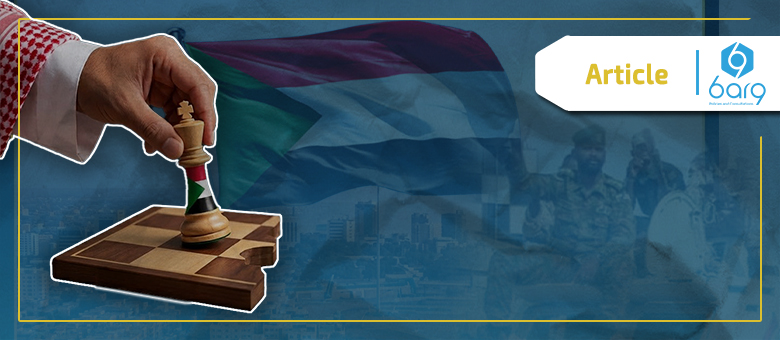
From Mediation to Indirect Military Support: How Riyadh Backed the Sudanese Armed Forces and Recalibrated Its Role?
Jalil Al-Fateh – Former Diplomat, Ministry of Foreign Affairs of Sudan.
Saudi Arabia’s involvement in the Sudanese conflict has evolved significantly beyond its initial role as a mediator hosting peace talks and issuing ceasefire appeals. Recent reports indicate that Riyadh has provided growing support to the Sudanese Armed Forces (SAF), led by General Abdel Fattah al-Burhan, and allied Islamist armed groups. This shift is evident in Saudi defense and financial linkages with Pakistan, including a proposed $1.5 billion arms deal intended to supply the Sudanese army with aircraft, drones, air defense systems, and ammunition.
In January 2026, Reuters reported that negotiations for the deal had reached an advanced stage, with Saudi Arabia acting as an intermediary, although details regarding Riyadh’s potential financing remained unclear at the time.
Saudi Funding, Military, and Political Support
In April 2026, Reuters, citing Pakistani security sources and a diplomatic source, revealed that Saudi Arabia had initially considered financing the Pakistani arms package before withdrawing its support and requesting that Islamabad pause the deal. This reported suspension followed a March meeting in Riyadh between Saudi officials and Sudanese military leaders, highlighting Riyadh’s substantial financial and political leverage.
Additionally, Intelligence Online reported in February 2026 that Saudi Arabia had supplied heavy artillery — including U.S.-made M777 howitzers — to the Sudanese Armed Forces and supported their operational training. Politically, Riyadh has maintained consistent backing for the Sudanese army, sustaining direct contacts with General Burhan, the Port Sudan authorities, and Islamist factions fighting alongside SAF units.
According to the Washington Institute for Near East Policy, increasing Saudi-Egyptian-Turkish coordination signals a gradual transition from pure mediation toward bolstering the Sudanese Armed Forces to prevent a decisive victory by the Rapid Support Forces (RSF).
Why Did Riyadh Step Back?
Pakistani security sources told Reuters that Western countries advised Saudi Arabia against engaging in proxy conflicts in Africa. Riyadh appears to have recognized that openly financing a large-scale arms deal could expose it to international criticism and damage its credibility as a neutral mediator within the Quartet on Sudan.
Consequently, Saudi policy has shifted from overt, large-scale military support to a more calibrated approach: providing political backing to the Sudanese army, maintaining close ties with its leadership, offering selective and discreet military assistance through intermediaries, and leveraging financial and defense relationships when necessary — all while avoiding the appearance of becoming a direct party to the conflict.
Advanced Weapons in a Terrorist-Permeated Environment
In Sudan’s fragmented battlefield, where designated terrorist groups operate alongside regular forces, serious concerns arise regarding the ultimate recipients of advanced weaponry.
According to a direct field assessment, One key ally of the Sudanese Armed Forces is the Al-Baraa bin Malik Brigade, which has been designated as a terrorist organization by the United States. According to the U.S. Treasury Department, the brigade has deployed over 20,000 fighters against the RSF and has received training and weapons from Iran’s Islamic Revolutionary Guard Corps (IRGC).
Reuters and the Financial Times have reported that approximately 20,000 Al-Baraa fighters participated in the retaking of Khartoum and were subsequently integrated into the army. An internal Islamist document also highlighted the movement’s role in mobilizing thousands of fighters and training civilians in support of the SAF. Ahmed Haroun, the former National Congress Party leader indicted by the International Criminal Court, publicly acknowledged the movement’s backing of the military.
State Responsibility and Strategic Risks
The U.S. Treasury has documented that Al-Baraa Brigade fighters have been involved in arbitrary arrests, torture, and summary executions of suspected RSF sympathizers. Arming a military institution that relies heavily on such militant groups risks empowering these factions politically and militarily after the war, potentially allowing remnants of the Bashir-era Islamist networks — which the 2019 revolution sought to dismantle — to regain influence within state institutions.
Furthermore, the brigade’s documented ties to the IRGC pose risks to Red Sea security. The transfer of advanced systems such as drones, aircraft, or air defense equipment could indirectly provide Iranian-linked groups with valuable technology and expertise near one of the world’s most critical maritime chokepoints.
Conclusion
Saudi Arabia’s current policy can best be described as calculated, limited support for the Sudanese Armed Forces. Riyadh aims to prevent the army’s collapse and strengthen its negotiating position, while carefully avoiding steps that would transform the Kingdom from a mediator into an overt belligerent in one of Africa’s most complex and destructive wars.
All rights reserved by BARQ Consultations © 2026